Lessons and Ramifications of the Bhopal Disaster
When the sun rose over Bhopal, India, on December 2nd, 1984, the clear skies and cool-mild weather to which its inhabitants woke were a far cry from the hellscape that would envelop the city not even 24 hours later. The capital of Madhya Pradesh—the second largest state in the country, second only to Rajasthan in the northwest—Bhopal was a bustling center for commerce, culture, and nature in the country (1-3). Unfortunately, after the events of December 3rd, it would become known for the worst industrial disaster the world had yet seen.
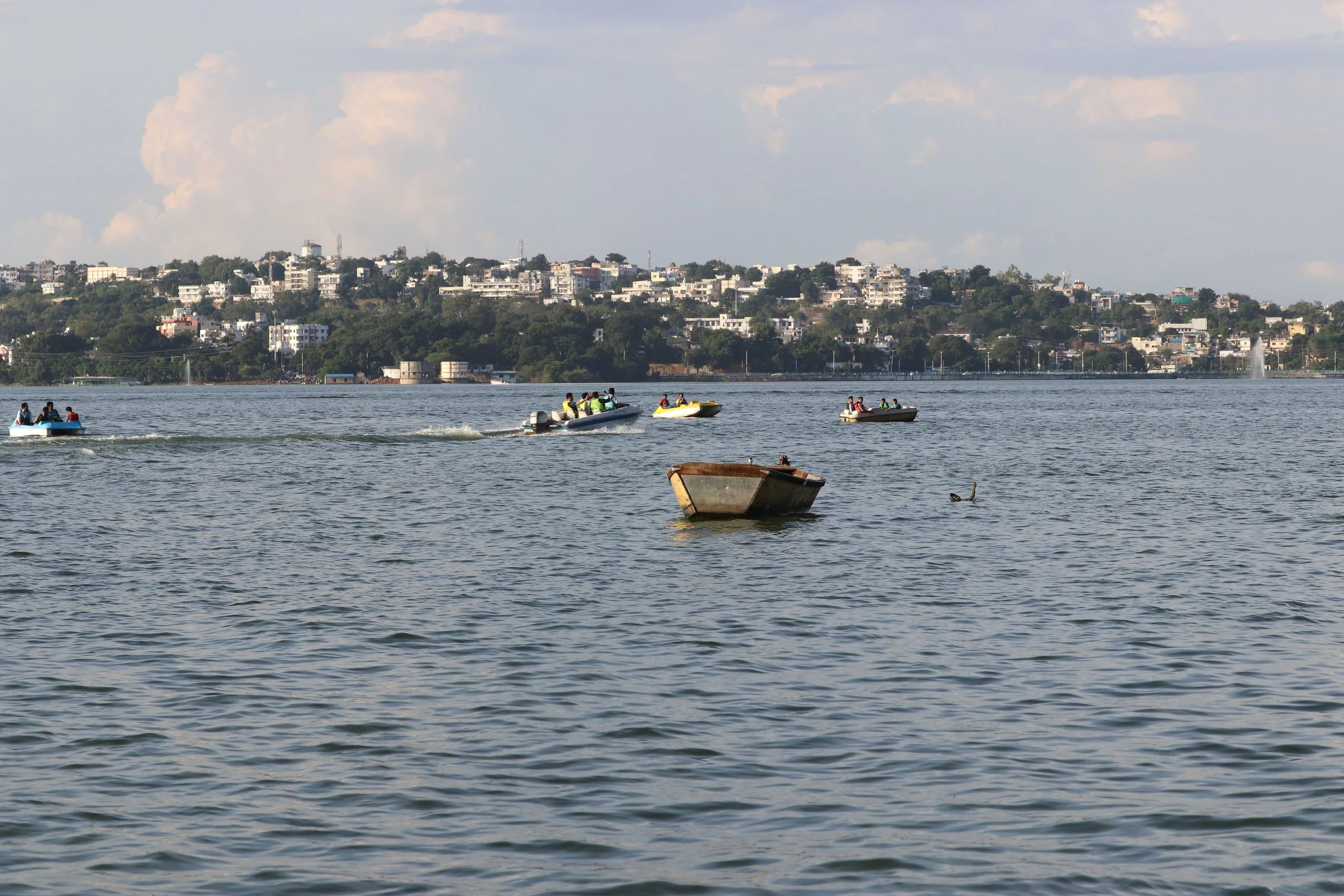
Boats float on Upper Lake in Bhopal with a cityscape in the background under a sunny sky. (Credit: Mohit Khare, pexels.com)
This is where we find this metropolis in the 1980s—vibrant, active, and on the cusp of a fresh burst of economic growth. The 1970s marked the beginning of an initiative to encourage international investment in Indian industry. The Union Carbide Corporation, which produces various chemicals and polymers on an international scale, established a plant for the manufacture of the pesticide Sevin (a generic name for carbaryl) in the Jaiprakash Nagar region of the city (1,4). The site of the plant, which neighbored several densely packed neighborhoods and a train station, was technically zoned for commercial and “light industrial” use, which did allow for the production of pesticides. However, competition within the industry at the time led the plant to resort to production of raw materials and intermediates as well, a practice called backward integration (1).
This may sound like a harmless, efficiency-boosting strategy at face value, but many of the chemicals involved in backward integration were often significantly more dangerous than the target products—the pesticides—alone. These risky chemical endeavors were cause for concern in and of themselves, but they would prove to be catastrophic when combined with further circumventions of safety protocol (1,5).
In 1984, the plant was on the brink of closing. A recent wave of famine and crop failures in the area had slashed the need for pesticides, and the factory was struggling to get by. Additional shortcuts were adopted—safety components were turned off to conserve energy or dismantled for use elsewhere—and compared to its sister plant in West Virginia, the Sevin plant in Bhopal was operating under severely reduced safety standards (1). It should not be taken lightly that the Indian government was aware of these deficiencies in factory protocol, but no authoritative entity did anything to stop them. Put bluntly, such shortcuts worked until they didn’t, and countless people paid for the inaction of the government and the UCC with their lives.
At approximately 11:00 pm on December 2nd, a plant operator noticed a leak in a gas container of methyl isocyanate (MIC) (1). What the employee did not know was that water was also leaking into the tank in a small but steady stream, instigating a violent exothermic reaction that was, quite literally, a ticking time bomb. It is unknown exactly what actions, if any, this worker took to allay the leak; at this point in time, it may have been beyond saving regardless.
The issue came to a head at 1:00 am on December 3rd, when a flare sent a monstrous plume of over 40 tons of toxic gas into the early morning air. Households awoke, choking, but there was nowhere they could run to escape the fumes before the damage was devastating and irreversible. Gases clung close to the ground like a seemingly innocuous fog, having been blown low by late-night winds. Over 3,800 perished within minutes—some vomited, others convulsed, still others choked to death. Countless livestock toppled as well, unable to escape the ubiquitous cloak of toxic fumes. The scene was imbued with chaos, desperation, and excruciating pain (1,5).
Some managed to escape the initial carnage after the explosion, but ultimately never recovered from the exposure. At least 10,000 deaths are estimated to have occurred within the subsequent several days, followed by 15,000 to 20,000 more in the twenty years following the disaster (1). It must be noted, however, that statistics regarding the injured and killed are likely grossly underrepresented due to the mass exodus of Bhopal’s inhabitants from the city following the catastrophe, meaning that personal experiences and anecdotes were generally only obtainable from those who stayed (1). Bhopal’s immediate death toll is somewhat disputed: on-site municipal workers making recovery efforts say 15,000, survivors say approximately 8,000, while Carbide placed their estimate at a shrunken 3,000 (5). A 2024 UN report states that over half a million people were exposed to the methyl isocyanate gas and struggle with some form of chronic illness as a result (6).
Interviewed after the tragedy, activist Rashida Bi stated that survivors “are the unlucky ones; the lucky ones are those that died on that night” (5). On the disputed death tolls, another survivor aptly stated that “such body counts become meaningless when you know that the dying has never stopped” (5). This is unfortunately all too true, as the physical effects of MIC exposure cause debilitating illnesses that are often fatal, even if they do not do so immediately (1,5,6). Others were impacted before they even left the womb; birth defects were rife following the disaster (1,4,6).
Methyl isocyanate and its byproducts wreak havoc on the human body. Its short-term effects are innumerable, including, but not limited to: chemosis (inflammation of the clear membrane of the eye) (7); pulmonary edema (fluid buildup in the lungs) (8); pneumonitis (inflammation of the lung tissue) (9); pneumothorax (a collapsed lung or lungs) (10); abdominal pain; and impaired memory, attention, and coordination (1). MIC also degrades at high temperatures, at which point it can produce deadly hydrogen cyanide; there is strong evidence that this occurred in the plant explosion, as the mortally wounded victims presented with the cherry-red blood and organ tissue that are characteristic of cyanide poisoning (1).
For medical professionals in Bhopal, treating the injured was an uphill battle and a race against time. Some patients responded well to treatment with sodium thiosulfate, a substance historically used to treat cyanide poisoning (1). The UCC recommended this treatment to disaster victims, but soon withdrew its endorsement, likely to minimize the perceived harm caused and thus avoid taking full responsibility (1). As will be discussed in more detail, this shucking of blame continues to be a recurring theme in the still-unfolding aftermath of Bhopal.
Across Bhopal, public health measures were severely limited well before the Sevin plant disaster. Improperly built drainage systems meant that human waste seeped into large nearby bodies of water. Tap water throughout the city was thus polluted, not to mention only available for a handful of hours each day (1). No cohesive emergency response team existed to handle an emergency anywhere near one of Bhopal’s caliber in 1984, and hospitals faced a shortage of doctors and beds (1).
Additionally, numerous protective measures existed within the plant itself to prevent this exact type of disaster from occurring, but were neglected. A water curtain, which would spurt from the ground to temper leaks or fire in the event of an emergency, couldn’t provide enough water to reach the gas leak (1,5). A connecting pipe, which would have allowed for the quick turnoff of the gas pressure, had been removed for maintenance, and a refrigeration system installed to prevent overheating had been shut down (1,5). Like other aspects of the catastrophe, however, these blunders were largely swept under the rug. The aftermath of Bhopal could have catalyzed an immediate turning point, a silver lining in an otherwise inconceivable tragedy, but it ultimately did not. Where there should have been accountability, blame was bandied about. The UCC gave the incident a wide berth, initially claiming the disaster was an act of “deliberate sabotage” by an unknown party (1).
The UCC abandoned the plant site after the disaster, disregarding any need for cleanup. Toxic heavy metals and other chemicals promptly leeched into local soil and water and have remained for decades. As of 2005, an estimated three million continue to suffer from health conditions and disabilities such as cancer, blindness, breathing difficulties, birth defects, and gynecological disorders as a result of the disaster, with at least 22,000 deaths per year being attributed to its fallout (1,6). There has been an increase in small scale industries (SSIs) in the years since the Bhopal disaster, which follow lenient rules for the disposal of waste. Consequently, chemical waste was regularly dumped into crucial bodies of water, such as the Yamuna River in India’s capital city of New Delhi (5). Dangerous levels of heavy metals—including cobalt, chrome, nickel, zinc, lead, and mercury—have been detected, among other harmful substances: a 1999 water analysis revealed concerning levels of trichloroethane, trichloromethane, 1,3,5-trichlorobenzene, and chloroform, whose continuous exposure can cause brain damage, cancer, and birth defects (5).
The tragedies at Bhopal serve as a tragic, and preventable, reminder that industrialization can have devastating consequences if profit is prioritized over safety and material progress and expansion are left unchecked. Industrial development is perhaps inevitable and can have favorable economic effects, but safety protocols must advance in proportion with industrialization and scientific progress—they must be proactive, not reactive, and offer medical and financial support and security for neighboring civilian populations. The enormity of Bhopal also highlighted a need for uniform international regulations, as a disaster of this magnitude in one place has ripple effects across the world. Some of these ripples, though, led to meaningful change.
The Bhopal Gas Leak Disaster Act, passed in March of 1985, was a ray of hope in the bleak years after the disaster. This legislation made the Indian government the sole representative of Bhopal victims both in the country and abroad, ultimately placing such cases wholly under Indian jurisdiction (1). Headway was also made with the burst of environmental activism that erupted in India following the tragedy. In 1986, the passage of the Environment Protection Act created the Ministry of Environment and Forests (MoEF), which enforced environmental laws (1). Other positive changes occurred internationally: the British chemical company Imperial Chemical Industries (ICI), which had subsidiaries in India, increased attention toward safety after the events at Bhopal. Upwards of 40% of capital expenditures were allocated towards environmental products in its Indian facilities, though safety standards still trailed those of its parent site in the UK (1).
Though not the prompt industrial and legislative overhaul that would have been ideal, additional steps of progress were made, largely because of pushback from the Indian people. The transfer of a DuPont nylon plant from Richmond, Virginia to Goa, India was avoided thanks to public outcry from residents. The town of Chennai was the second-choice location for the plant, but efforts there met a similar resistance, though this time from the state government, which reiterated a need for proper health and environmental protections (1). Ultimately, citizens and state governments enacted the change that should have been made sooner and on a much larger scale by the federal government.
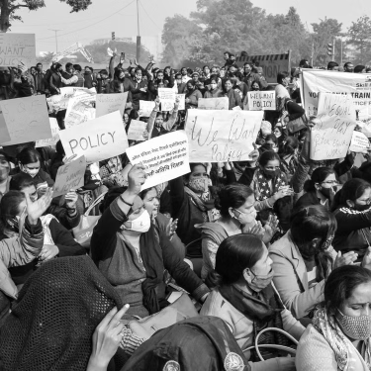
A powerful black and white image of a large protest rally demanding policy change in India. (Credit: Rahul Sapra, pexels.com)
At long last, the UCC reluctantly accepted blame for the incident and reached a $470 million settlement with victims, whose families’ average compensation was $2,200.1 Largely to avoid litigation, the company is now about one-sixth of its 1984 size (1). Owned by Dow Chemical Company today, the Union Carbide Corporation has an up-and-running website including the following statement on its response to Bhopal:
“In the wake of the incident, the Union Carbide Corporation (UCC) provided immediate aid to the victims and continued to do so in the years that followed. This included providing medical equipment and supplies, sending an international team of medical experts to Bhopal to aid victims, cooperating with the government of India on information sharing, and enabling medical experts to quickly determine how to treat MIC-related illness” (11).
The UCC did provide some financial compensation to victims with the aforementioned settlement, but the average payment was allegedly far from sufficient in the treatment of survivors’ debilitating and often chronic ailments (4-6). The other actions mentioned in this statement—the dispatching of medical professionals, the sharing of information about MIC toxicity, et cetera—follow a similar pattern; while the actions themselves are technically true, their immediacy, scope, and overall adequacy are highly disputed by activists and researchers alike (1, 4-6).
The UCC’s enduring carelessness and lack of accountability become all the more frustrating considering that Bhopal was not an isolated incident; it was simply the most devastating in a string of preventable industrial disasters that lacked an appropriate response by those in charge. The pesticide Endosulfan caused significant deaths in the Indian state of Kerala but continued to be manufactured until the turn of the century (1). Residents of Kodaikanal, a municipality in Tamil Nadu, denounced a nearby thermometer factory when mercury was found in its waste dump, which was located near a school (1). India is also a prominent consumer of asbestos, largely imported from Canada, but a lack of proper regulations has resulted in significant morbidity and mortality from exposure to the carcinogenic mineral (1). Modern-day issues plaguing the region include loosely regulated coal power plants and a general lack of enforcement surrounding vehicle emissions (1).
The Bhopal disaster remains a dark stain on the legacy of the UCC and those of similarly zealous corporations in today’s industrial age. The suffering continues to this day, and the site has yet to see a thorough cleanup. As the horrifying events of that fateful December night creep toward their 50th anniversary, there is still much to be learned. Industrial protocols regarding waste disposal and the safe maintenance of toxic chemicals must face consistent reevaluation and adjustment to prevent potentially disastrous oversights—the long-term health of the surrounding environment and its residents are at stake if authorities prioritize their own convenience and profit. While the events of December 3rd, 1984, are unerasable, we—businesspeople, government officials, and scientists alike—must extract the clear lessons that this catastrophe provides and implement them into our own endeavors. In today’s world of rapid innovation and enterprise, taking such consideration is the least we can do for the victims of this horrible event.
Learn more about the ongoing quest for justice and how you can help: International Campaign for Justice in Bhopal
References
Broughton, E. The Bhopal Disaster and Its Aftermath: A Review. Environ. Health2005, 4 (1). DOI: 10.1186/1476-069x-4-6.
List of Indian States by Area: Largest to Smallest States of India. SPM IAS Current Affairs. https://spmiasacademy.com/currentaffairs/list-of-indian-states-by-area/ (accessed 2026-07-06).
A Short History of the City of Bhopal. International Campaign for Justice in Bhopal. https://www.bhopal.net/what-happened/setting-the-stage-for-tragedy-1969-1984/a-short-history-of-the-city-of-bhopal/ (accessed 2026-08-31).
Wood, C. S. The Bhopal Saga: Causes and Consequences of the World’s Largest Industrial Disaster. Environ. Health Perspect.2005, 113 (5), A344–A344. DOI: 10.1289/ehp.113-a344a.
What Happened. The Bhopal Medical Appeal. https://www.bhopal.org/continuing-disaster/the-bhopal-gas-disaster/union-carbides-disaster/ (accessed 2026-07-05).
Bhopal: A lingering legacy of contamination and injustice. OHCHR. https://www.ohchr.org/en/press-releases/2024/12/bhopal-lingering-legacy-contamination-and-injustice (accessed 2026-07-06).
In the Blink of an Eye: What Is Chemosis? Cleveland Clinic. https://my.clevelandclinic.org/health/symptoms/chemosis (accessed 2026-07-15).
Mayo Clinic. Pulmonary edema - symptoms and causes. Mayo Clinic. https://www.mayoclinic.org/diseases-conditions/pulmonary-edema/symptoms-causes/syc-20377009 (accessed 2026-07-15).
Mayo Clinic. Pneumonitis - Symptoms and causes. Mayo Clinic. https://www.mayoclinic.org/diseases-conditions/pneumonitis/symptoms-causes/syc-20352623 (accessed 2026-07-15).
Mayo Clinic. Pneumothorax. Mayo Clinic. https://www.mayoclinic.org/diseases-conditions/pneumothorax/symptoms-causes/syc-20350367 (accessed 2026-08-31).
About Union Carbide. Union Carbide Corporation. https://www.unioncarbide.com/en-us/about-union-carbide.html (accessed 2026-07-20).